
Inflation Reduction Act (IRA)

Are you considering an energy-efficient upgrade for your home?
Are you considering an energy-efficient upgrade for your home? Under the Inflation Reduction Act, you may qualify for rebates or tax credits on your HVAC installation.
Goettl Air Conditioning & Plumbing is here to help homeowners upgrade their heating and cooling with energy-efficient solutions that reduce your carbon footprint while saving you money on utility bills. Learn everything you need to know about the IRA tax incentives and qualifying products.
What Is the Inflation Reduction Act?
The Inflation Reduction Act (IRA) is a landmark act created to offset the effects of inflation, reduce healthcare costs, reduce carbon emissions, improve taxpayer compliance, and fund the Internal Revenue Service (IRS). Over $500 billion in new spending and tax breaks are in the IRA for homeowners, including $369 billion invested in clean energy sources and incentives for homeowners to upgrade their homes with energy-efficient solutions.
Background of the IRA
Burning fossil fuels is detrimental to the environment in two main ways: global climate changes from greenhouse gas emissions in the form of CO2e, and damage to local air quality from nitrogen oxides, volatile organic compounds (VOCs), sulfur dioxide, and particulate matter.
Though the IRA combats both problems, its primary focus is on reducing greenhouse gas emissions. As greenhouse gases accumulate in the atmosphere and temperatures rise, each new ton will cause higher temperatures and resulting severe weather phenomena like floods, droughts, hurricanes, and tornados.
With the global population growth, each natural disaster can affect more people and property, increasing the economic costs each year. According to the U.S. Environmental Protection Agency (EPA), the measure of value of preventing these damages is an estimated $212 per ton in 2025, rising to $308 per ton in 2050.
Though other climate change policies project a reduction in US emissions, the IRA accelerates these initiatives to protect the environment and prevent future economic costs related to greenhouse gas emissions.
In addition to the global benefits, the IRA directly benefits people living in the US by reducing local pollution. Local air pollution causes car accidents, poor productivity, and various health effects. Local pollutants are emitted alongside greenhouse gas emissions that impact the global climate, so in reducing them, the IRA also limits the greenhouse gases that can affect local air quality. Based on projections, the estimated benefits for 2030 range from $20 billion to $49 billion. Like the global benefits, the local benefits of IRA initiatives will likely grow over time.
Energy efficiency is a growing concern for many homeowners. Though there are big benefits for the environment, there are also direct benefits for homeowners.
Benefits of Energy Efficiency Upgrades and IRA Incentives
Optimized Energy Use
A home energy audit, also known as an energy evaluation or assessment, is a smart way to determine how your home consumes energy and what specific measures you can take to make it more energy efficient—rather than upgrading just for the sake of it.
Lower Utility Bills
Energy costs are rising, making it more expensive than ever to heat, cool, light, and power your home. With energy-efficient upgrades, you may save hundreds of dollars each year on your utility bills on top of your tax credit or rebate. In fact, the EPA estimates that energy-efficient improvements can save you up to 25% on your total energy costs.
Increased Resale Value
If you’re like many homeowners, your home is the largest investment you’ll make in your lifetime. Naturally, you want to get as much value as you can out of it if you choose to sell. Energy-efficiency upgrades enable you to market your home as energy-efficient—earning a potential 2-6% higher sale price.
Better Home Comfort
If your home isn’t efficient, you may be used to drafts, hot and humid areas, and inconsistent temperatures. However, an energy-efficient home can improve your comfort level and your indoor air quality, reducing cold drafts, hot spots, and pollutants like humidity, pollen, and dust.
Safeguard for Power Outages
If you live in an area prone to hot or cold extremes, power outages can be extremely uncomfortable—or even dangerous—if they last longer than a few hours. However, with high-quality insulation and energy-efficient appliances, your home will have more stable temperatures and be resistant to winter chills and summer heat during an outage.
More Eco-Friendly
Efficient appliances draw less power from the grid, reducing the overall amount of power that needs to be produced. This not only helps the local ecosystem but can also improve the air quality in your area. Energy-efficient appliances also conserve precious resources like water.
IRA Programs
The IRA programs that apply to homeowners include:
25C Residential Energy Efficiency Tax Credit Program
The 25C Residential Energy Efficiency Tax Credit existed before the IRA but the new act extended its benefits into 2032 and increased it to 30% of the total installation costs (up to $3,200 per year). This tax incentive program offers tax savings for homeowners who purchase high-efficiency HVAC and water heating products, such as water heaters, heat pumps, and boilers.
The following upgrades may be eligible for a tax credit of up to 30% as part of the IRA’s incentives for household electrification:
- Heat pumps
- Heat pump water heaters (HPWHs)
- Energy audits
- Qualifying electrical panel upgrades
- Insulation, such as batts, rolls, blow-in fibers, rigid boards, expanding spray, weatherstripping, caulk, and air seal.
- Non-heat pump products like building envelopes or insulation
Select appliances, including HPWHs and air source heat pumps for space heating and cooling, may be eligible for a tax credit of up to $2,000 annually. Some HPWHs and heat pumps with electrical panel upgrades may also be eligible for up to $600 in tax credit.
There are product-specific annual limits, including:
- Qualifying energy property, including qualifying water heaters and oil boilers: $600
- Qualifying windows: $600
- Qualifying doors: $250 for a single door or $500 total
- Home energy audit: $150
Tax credits reset each year, so homeowners may be eligible for credits on multiple upgrades installed in different tax years. For example, if you install a new heat pump system and claim a tax credit in 2024, you may be eligible to upgrade your HPWH or electrical panel in 2025 to get another credit.
At a Glance
| Total Annual Credit | Up to $3,200 |
|---|---|
| Heat pumps and HPWHs | Up to $2,000 |
| Other upgrades | Up to $1,200 |
| Annual Credit for Heat Pumps and HPWHs | Up to $2,000 |
|---|---|
| Heat pumps | Up to $2,000 |
| HPWH | Up to $2,000 |
| Annual Credit for Other Upgrades | Up to $1,200 |
|---|---|
| Insulation | Up to $1,200 |
| Doors | Up to $500 |
| Windows | Up to $600 |
| Electrical panel | Up to $600 |
| Energy audit | Up to $150 |
HOMES Rebate Program
The HOMES Rebate Program is a state-level initiative that provides rebates to homeowners who make energy-efficient home improvements. Its goal is to encourage practices that reduce energy consumption and decrease greenhouse gas emissions.
The eligibility requirements of the HOMES Rebate Program can vary by state, but the program may offer:
- A maximum rebate of $2,000 or half the cost of the retrofit (whichever is less) for homes with energy reduction of 20%.
- A maximum rebate of $4,000 for homes with energy reduction of 35%.
- A maximum rebate of $8,000 for homes with an energy reduction of 35% that qualify as lower income (less than 80% of the median income in the area).
Rebates are based on modeled energy savings measured in kWh or kWH equivalent for single and multifamily homes.
Home Electrification and Appliance Rebate (HEAR)
The Home Electrification and Appliance Rebate (HEAR) incentive program makes homeowners eligible for point-of-sale rebates. Instead of waiting to claim the rebate at tax filing or mailing in a rebate, the rebate is applied at the time of purchase. HEAR offers up to $8,000 to lower the purchase price for heat pumps used for home heating and cooling, but it’s based on household income.
This voluntary program offers up to 100% of the electrification costs for low-income homeowners, though homeowners with moderate incomes may receive up to 50% of the costs. Both programs are up to $14,000.
HEAR includes the following qualified electrification projects:
- Heat pump water heaters
- Heat pump dryers
- Heat pump HVAC systems
- Electric stoves and cooktops
- Some upgrades, such as air sealing, insulation, wiring, ventilation, and circuit panels
- Purchase, installation, and other project costs
- Rebates for heat pumps, HPWHs, and electric panel upgrade
3C-REN Program
State and federal policies are making record investments in climate and energy actions, including Regional Energy Networks (RENs) through the California Climate and Energy Collaborative (CCEC).
3C-REN (Tri-County Regional Energy Network) is a partnership between the counties of San Luis Obispo, Santa Barbara, and Ventura to offer energy-saving programs and industry training to strengthen local job markets, reduce energy use, and support efforts to achieve climate goals.
Available to CA residents in the tri-county region, these programs help homeowners save money and make their homes healthier with energy-efficient upgrades. The rebates range from $500 to $5,000 per project, including:
- Multifamily Home Energy Savings: Average rebates of $6,300 for a heat pump and $2,300 for heat pump water heaters.
- Single Family Home Energy Savings: Up to 75% of the total project cost when working with a participating contractor.
Along with direct rebates, 3C-REN offers free energy assessments to help homeowners identify areas for saving energy and hosts educational events for residents to learn about energy upgrades and incentives.
Which Systems Qualify Under IRA?
Though the IRA offers sweeping incentives for home energy upgrades, it’s important to determine whether appliances and upgrades are eligible for tax credits or rebates before completing your purchase.
Always check with a tax advisor or HVAC professional, but here’s a general overview:
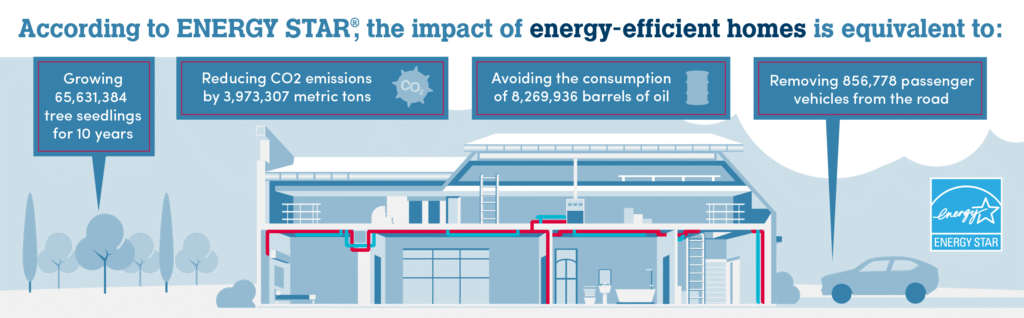
ENERGY STAR® Certified Appliances
ENERGY STAR® certified appliances have been meticulously inspected and certified for energy efficiency. The rigorous testing process involves a series of professional tests in EPA-supervised laboratories, ensuring that the product fits the IRA criteria.
CEE Tiers
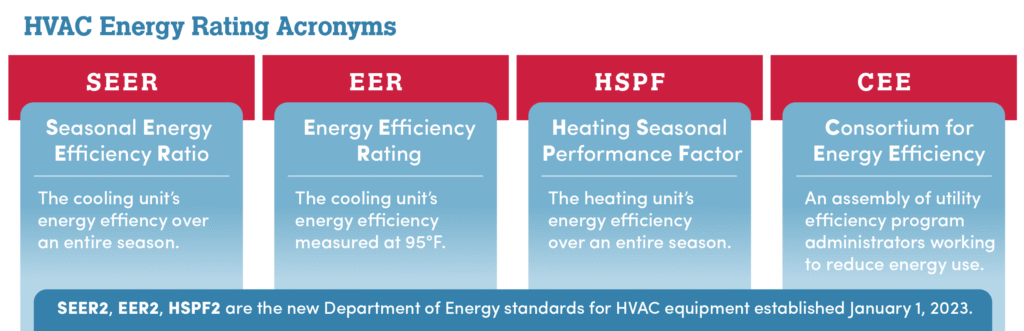
The Consortium for Energy Efficiency (CEE) ranks appliances and buildings based on voluntary levels of energy efficiency with CEE tiers. The tiers are in ascending order of efficiency, so the highest tier represents the highest level of energy efficiency.
The IRA also categorizes appliances by CEE tiers. The tiers that may be eligible for tax credits include 1, 2, and 3, depending on the product category. Note that all CEE tier products are ENERGY STAR® Certified Appliances.
Additional Requirements for Other Appliances
Air conditioning and air source heat pumps have additional requirements:
Central Air Conditioners
- 30% of the project cost up to $600 maximum
- Split systems must be ENERGY STAR® certified with SEER2 ≥ 16
- Packaged Systems must be ENERGY STAR® certified with SEER2 ≥ 15.2, EER2 ≥ 11.5
Air Source Heat Pumps
- 30% of the project cost, up to $2,000 maximum
- Ducted split systems must be ENERGY STAR® certified with HSPF ≥ 7.8, SEER2 ≥ 15.2, EER2 ≥11.7
- Packaged systems must be ENERGY STAR® certified with SEER2 ≥ 15.2, EER2 ≥ 11.5
- Ductless mini-split (non-ducted) Systems must be ENERGY STAR® certified with SEER2 ≥ 16, EER2 ≥ 12, HSPF2 ≥9
ENERGY STAR® Cold Climate Models
- Ducted systems (split and packaged) must be SEER ≥ 15.2, EER2 ≥ 10 and HSPF2 ≥ 8.1
- Mini-split systems must be SEER2 ≥ 16, EER ≥ 9, and HSPF ≥ 9.5
Per-Project Limits
To be eligible for the IRA, new appliances must be purchased and installed in an existing home that is a principal residence between January 1, 2023, and December 31, 2032. The incentives don’t apply to rentals and new construction.
There’s a new system for energy efficiency that went into effect on January 1, 2023, as well. Seasonal Energy Efficiency Ratio 2 (SEER2), Heating Seasonal Performance Factor 2 (HSPF2), and Energy Efficiency 2 (EER2) replaced the previous efficiency rating system.
How to Apply for Tax Credits and Rebates
The terms “tax credits” and “tax rebates” are used interchangeably, but they have different eligibility requirements and benefits. Tax credits are used to offset your tax liability or the taxes you owe, at the end of the year. Only homeowners who have a tax bill, not a refund, are eligible for tax credits.
Tax rebates, on the other hand, are a refund of taxpayer money after a retroactive tax decrease. They can be enacted at any time of the year and encourage taxpayers to make certain types of purchases or to stimulate the economy with cash. The eligibility requirements for tax rebates vary by the rebate itself, but generally, you don’t have to wait until you file your tax return to receive your rebate payment.
While the incentives are available now, the IRS is currently working on implementing the IRA credits and deductions. Depending on the state, the programs are expected to be activated completely by 2024.
If you’re planning your home renovations and related tax benefits, give Goettl Air Conditioning & Plumbing a call to discuss your options and maximize your IRA benefits.
Additional Resources:
Department of Labor – Inflation Reduction Act Tax Credit
Home Energy and Appliance Rebate (HEAR)IRS.gov Energy Efficient Home Improvement Credit
What Our Customers Say About Us


Our Story
It all started with a flashlight.
Our CEO, Ken Goodrich, was a 10-year-old boy holding a flashlight for his dad as he worked on an air conditioner for a customer. His father was an independent technician in Las Vegas who admired the longevity and quality of Goettl products. In 2013, Goodrich purchased Goettl Air Conditioning & Plumbing and has since expanded the company across Arizona, Nevada, Texas, and Southern California.